The EU is about to make leaving your cloud provider free, but most companies still feel stuck

In just a few months’ time, cloud providers operating in the EU will no longer be able to charge customers for switching. In fact, from January 2027 under the EU Data Act, switching charges, including the fees for moving data out of a platform, must be removed entirely.
This is a significant and very welcome change. For years, the cost of taking data out of a platform has been one of the biggest reasons organisations simply stayed where they were. With that barrier set to lift in the new year, it presents an opportunity for IT leaders to relook at their contracts.
But unlike consumers, who can now switch banks, electricity providers or mobile phone providers without hassle, the reality for most businesses is that while removing the exit fee is incredibly helpful, it doesn’t make leaving easy.
That’s because the charges only represent one part of the moving costs. The bigger cost sits in the work required to make it happen, such as developing new architecture, skills and contracts alongside the time it takes to plan, test and cut-over a live environment. This is what I often call the dependency cost and it is this cost that enterprise find it most difficult to meet.
What VMware customers have already learned
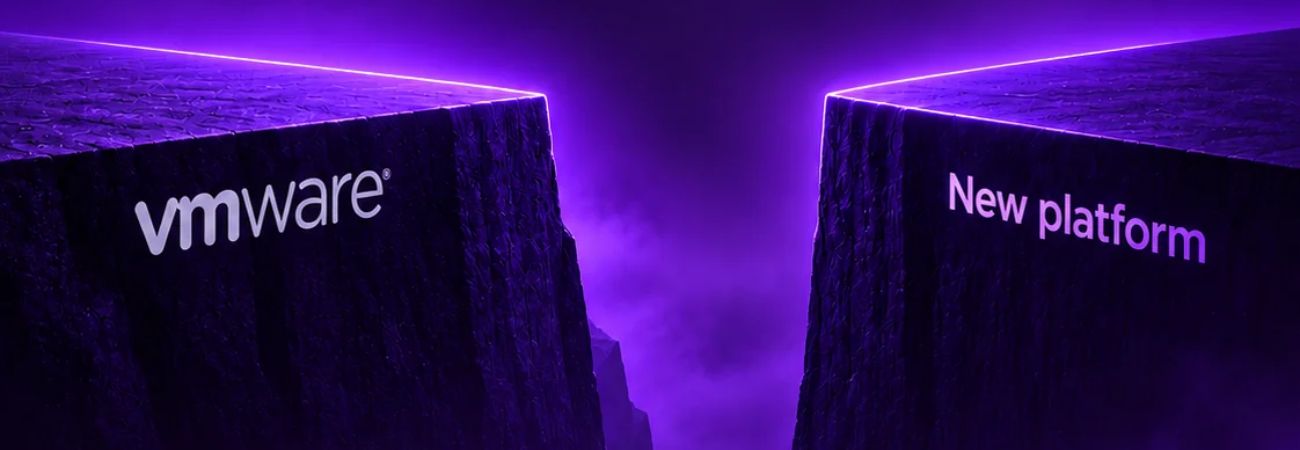
The fallout from Broadcom’s acquisition of VMware, shows just how hard it can be to change providers.
Last year, CISPE members reported increases of 800 to 1,500 percent to the European Commission and with Broadcom also ending its contracts with hundreds of European cloud service partners, many customers have suddenly been left with a significantly larger bill and without the provider they had built around.
Yes, the response to these changes has been significant, but it’s also been incredibly slow. Research by CloudBolt in January 2026 found that while 86% of organisations are actively reducing their VMware footprint, only 4% have fully migrated away.
To me, that gap is not a failure of will, it’s evidence of the difficulty. I read an interesting article in which Gartner analyst Paul Delory noted the lack of finding a like-for-like replacement. For IT leaders, having to move from one platform to several adds significant complexity to an already challenge job.
Interestingly, Paul is equally clear about the commercial logic on the other side, that “VMware is betting that you can’t move off and they can jack the price way up.”
VMware is betting that you can’t move off and they can jack the price way up.
Paul Delory – VP Analyst, Gartner
For me, that’s the real lesson here. The pricing wasn’t the root problem, the dependency was. Once the total cost of leaving is high enough, the customer loses its leverage, and the terms are suddenly set by whoever controls the platform.
The licensing squeeze and sovereignty are the same argument
I often use the VMWare example when I speak with customers because the questions around dependency, i.e.. who controls your infrastructure, your costs and your roadmap, are essentially the same as those that now sit at the centre of the sovereignty debate. Where does your data reside, which laws apply to it, who can access it, and how easily could you move it if you needed to?
I always advise customers that if they can’t answer those questions under their current agreement, then they do not have control, whatever the contract says. Nor does an organisation that can only leave at great cost and over several years.
For me, predictability belongs in the same conversation. In Flexera’s 2026 State of the Cloud report wasted cloud spend has risen for the first time in five years to an estimated 29%, with 85% of organisations saying managing cloud spend remains a top challenge. This is significant and points to a bigger problem that organisations can’t reliably budget for things they can’t predict, nor can they negotiate from a position they cannot leave.
Difficult, but worth it
With the EU Data Act changes coming into effect in January 2027 alongside the planned end of support for VMware’s vSphere 8 in October 2027, lots of organisations I’m speaking to at the moment are using this time to get ahead and start planning large migration programmes.
The reality is migration is difficult and nobody should pretend otherwise, but it is achievable with a plan. For me, that plan begins with discovery, for example, understanding what is running, what depends on what, and which workloads need to move.
The reality is migration is difficult and nobody should pretend otherwise, but it is achievable with a plan.
Aritxa Troyano – Senior Product Manager, Cloud & Data Centre Services
My advice to IT leaders is to start small. A new, greenfield project on a different platform carries far less risk than their most sensitive production system. It also builds the skills and confidence within their team to go further, so that the estate can eventually move in stages.
Another important point when planning a migration is to be very clear about who does what. Providers should be honest about which parts of a migration they deliver, and which fall to the customer or its integration partners. Discovery, planning, testing and cut-over all have to be owned by someone.
Finally, organisations should design for exit from the outset. That means open standards, portable architectures and full access to their own data and configurations, so that the next change in commercial terms is a decision rather than a crisis.
The upcoming changes to the EU Data Act will make leaving cheaper. But it will not make it simple. My advice is to use the next twelve months wisely to understand what your dependencies are, and how you can start moving deliberately, rather than waiting for the next renewal and allowing the provider to make the decision for you.
Take back control of your cloud
Explore a sovereign cloud built on open standards, with predictable costs and no vendor lock-in.


Stay ahead of the curve with Ilkari
Sign up to the latest news, cutting-edge insight, product updates and exclusive announcements – delivered straight ot your inbox.